
A possible direction
A local visibility platform for multi-location teams
Your location intelligence product, with a name rooted in the market it serves.
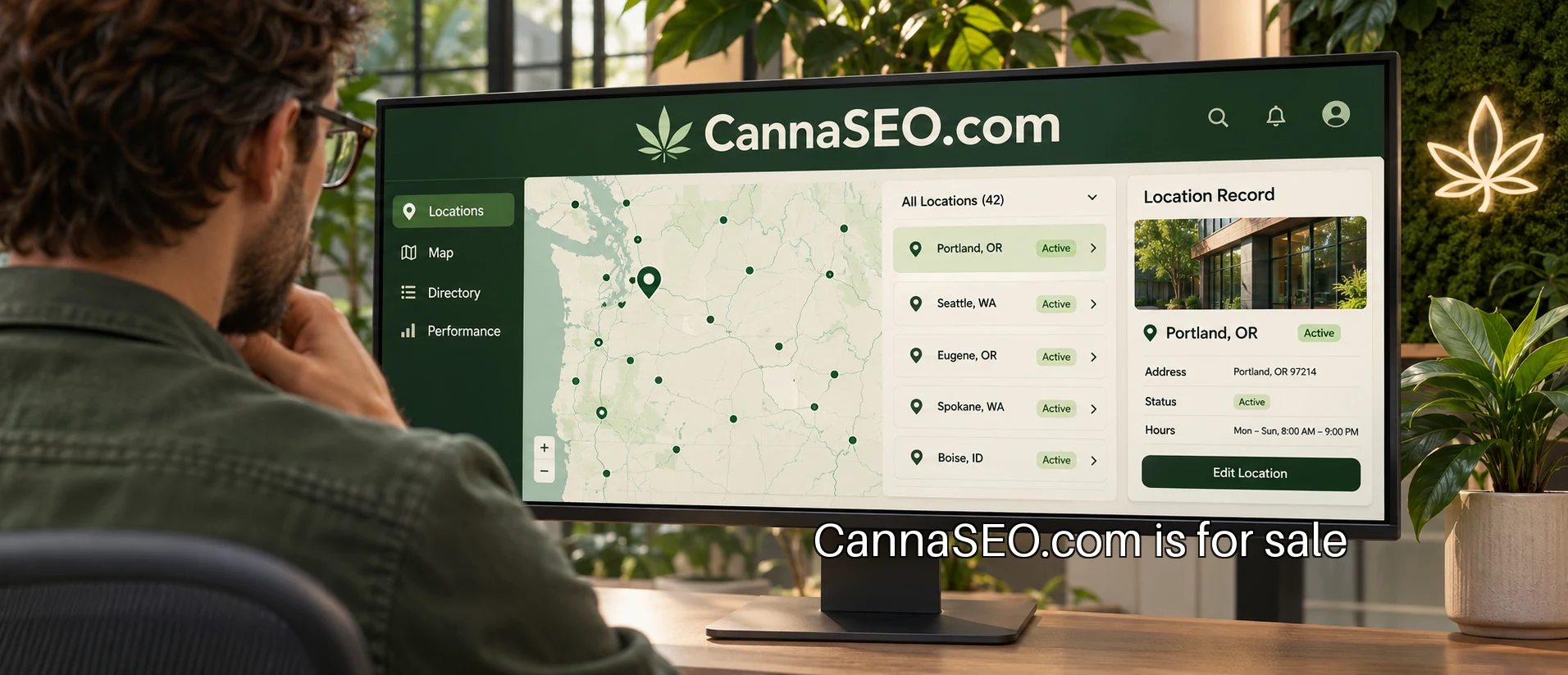
A location team can lose a surprising amount of time deciding which spreadsheet contains the correct hours or who approved a changed address. A product built on CannaSEO.com could organize that work for multi-location cannabis businesses. The name keeps the product close to the market and the search-related information its users maintain. The first useful feature would be a dependable location record with a clear route from proposed change to approved update.
This is an illustrative software concept. The customer is an operations or marketing team managing several business locations. The daily user might coordinate location managers, a website editor and an outside agency. Those people need a common record and a visible queue of decisions. Start by understanding the handoffs between them before designing a large reporting dashboard.
Give every location a reliable record
A first record could contain a stable internal identifier, public business name, address, contact details, normal hours, special hours, website URL and the person responsible for verifying each field. Add the date the information was checked and the source used. The internal identifier matters because public names and addresses may change while the team still needs to recognize the same location in its history.
Keep the underlying value distinct from its display format. A telephone number might appear differently on a web page and in an internal document, but both representations should refer to the same approved value. Give special hours their own structure instead of placing them in an unsearchable note. That makes upcoming exceptions visible to the person scheduling changes.
Design the approval before the automation
A proposed change should show the current value, the new value, its effective date and the reason for the update. Assign a reviewer who can verify the business fact. The reviewer should be able to approve, return for clarification or reject the proposal with a short explanation. Each action becomes part of the location's change history.
After approval, the system can create a publishing task for the relevant destination. The person completing that task records where the update went and how it was checked. Keeping approval separate from publication helps a team see the difference between information it has accepted and information visitors can already see. This distinction is useful even when the initial product has no external publishing integrations.
Anchor the product in actual representations
Google's business representation guidelines emphasize accurate real-world business information, including names and addresses. A product team can use that guidance as one reference while defining field validation and review prompts. Treat policy references as dated resources that an assigned person reviews, so the product does not freeze an old interpretation into its interface indefinitely.
A website destination has its own requirements. The record should link to the actual location page and identify who controls the page template. The tool can present a checklist for verifying the approved details after an editor publishes them. This makes the first version useful through coordination and evidence, while giving later integrations a clear process to automate.
Follow one holiday-hours change
Picture an operator with twelve locations preparing for a holiday week. One location submits reduced hours, another confirms normal hours and a third has not responded. The central coordinator needs to see those as three different states. A blank field should not silently become confirmation that the regular schedule still applies.
The location manager submits the exception with the applicable date. An operations reviewer approves it. The website editor updates the page, then records the public URL and verification time. The coordinator sees the remaining destination tasks in a queue. When the holiday passes, the exception remains in the history without overwriting the normal weekly schedule. This example offers a practical first workflow to prototype with real users.
Keep the first release small
The minimum product could consist of a location list, an editable record, role-based approvals, a change log and an export. It does not need a complex score to be useful. A clear overdue-review queue may solve a more immediate problem than a colorful aggregate dashboard. Ask users which missed handoff caused work last month, then make that handoff visible in the prototype.
For a pilot, choose a few locations with different operating patterns. Include a location with straightforward hours and one with recurring exceptions. Observe how people interpret the field names, where they leave comments and which approvals move outside the product. Those detours show where the workflow needs better language or a different owner. Keep a short record of each design change and the problem it addresses.
Give the product a distribution path
An initial route to market could be partnerships with agencies that already coordinate website updates for multi-location clients. The agency gets a shared workspace it can use with the client's operations staff. The founder gets direct feedback about repeatable coordination problems. A demonstration based on one complete change is likely to reveal more than a tour of every screen.
The content around the product can teach the same narrow job. A public example of a location record, an approval checklist and a holiday-hours review can help a prospective customer evaluate the approach. Google's SEO Starter Guide provides broader context about helping search engines understand a site's content; the product's own material can stay focused on keeping the underlying business information organized.
Decide what the pilot must prove
Before recruiting a pilot customer, define completion in operational terms. Can a location manager submit a correction without help? Can the reviewer see exactly what changed? Can the central coordinator distinguish approved information from published information? Can the team retrieve the previous value when a question arises? Use those questions to choose the next development task.
Begin with a clickable prototype and one sample location record, then walk through a proposed change with the people who would actually handle it. If this focused product fits your plans, ask PremiumBrands about acquiring CannaSEO.com. PremiumBrands can also help acquire another name when your preferred identity is outside the collection.
Put your search business on CannaSEO.com
Tell PremiumBrands about the business you have in mind. If another name is the right fit, PremiumBrands can help you acquire a name outside the collection.
Get Started